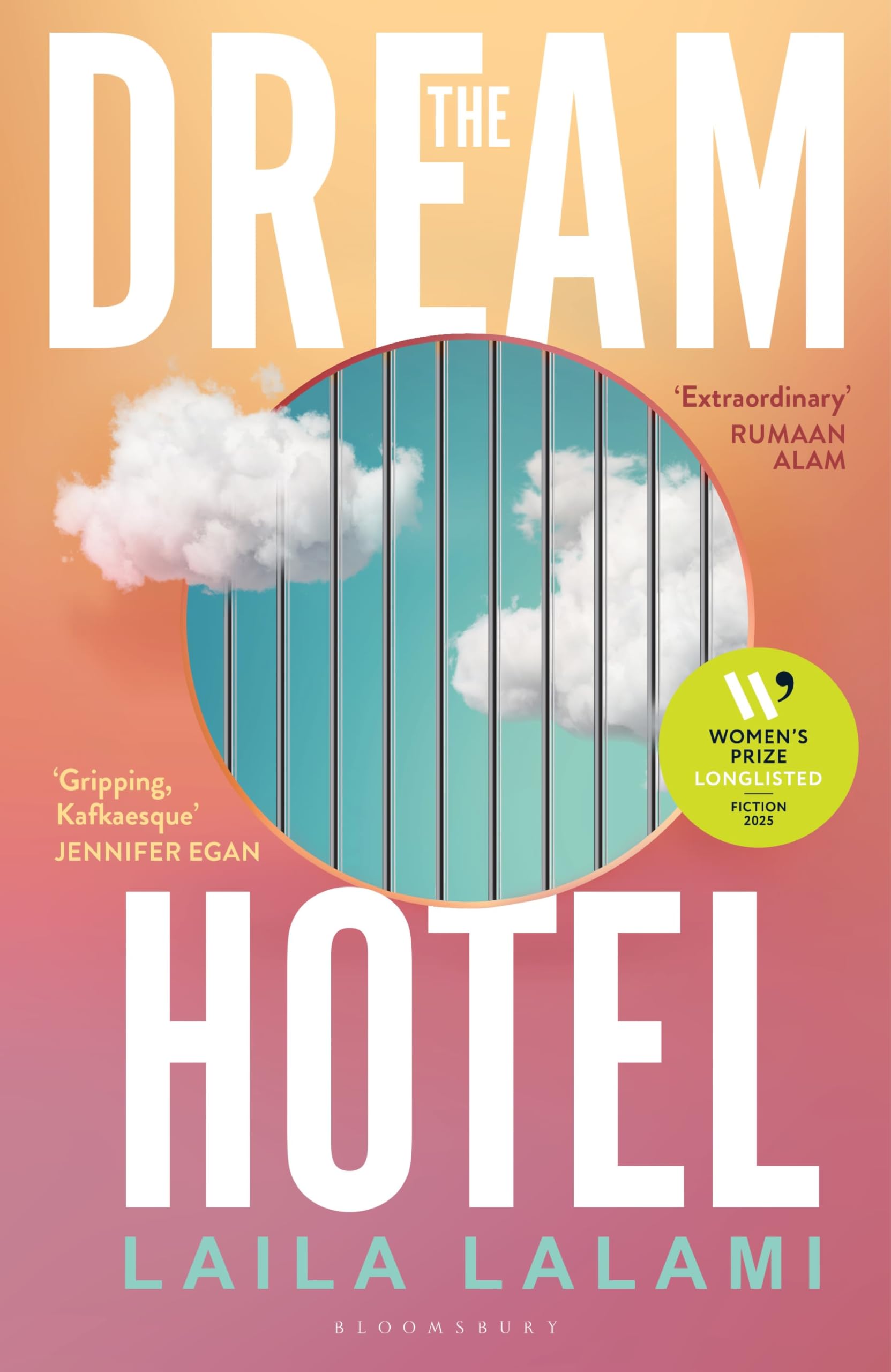
The Dream Hotel, by Moroccan-American author Laila Lalami, was long-listed for the 2025 Women’s Prize for Fiction. Set in a near-future America, it is a finalist to the 2026 Edgar Allan Poe Award for Best Novel.
The story follows Sara Hussein, a museum archivist who is returning from London to her family in California. Arriving at the Los Angeles International Airport, Sara is intercepted by the Risk Assessment Administration because its AI algorithm has determined she is at imminent risk of committing a crime.
Here, readers are reminded of the Precrime Division in Philip K Dick’s 1956 sci-fi novelette “The Minority Report”. However, compared to Dick’s “precogs”, the AI algorithm in Lalami’s dystopian story is much scarier because it takes a “holistic” approach and observes more than 200 types of data connected to each individual.
That data is then calculated into a “risk score” – if one’s score reaches above a certain threshold, then many of their privileges can be taken away, including their freedom. In Sara’s case, using data collected from her dreams, the AI algorithm determines she will harm her husband. As a result, she is detained for observation for 21 days – or so she is told.
To say the least, Sara’s stay at the “dream hotel” is both horrendous and terrifying. As weeks become months, every tiny infraction is deemed a reason to extend her detention period. Worse, the “retainees” are constantly monitored through cameras and other devices, including and especially their “Dreamsavers”, a widely used skull implant that is supposed to ensure better sleep.
The product’s fine print allows its manufacturer to share the user’s dreams with the government – and people are fine with this, because data mining of the kind by big tech companies not only enables law enforcement agencies to identify and detain potential murderers and other violent criminals but also helps prevent suicides.
Indeed, in that near-future America: “Entire generations have never known life without surveillance. Watched from the womb to the grave, they take corporate ownership of their personal data to be a fact of life, as natural as leaves growing on trees.”
“That they have committed no crime is beside the point.” Who cares if the government surveillance is pervasive? It is OK for a minority to suffer some inconvenience, as long as the majority can live in safety and peace…right?
To this reviewer, what makes The Dream Hotel such a compelling read is its plausibility – that “near future” can be NOW, with our world being increasingly algorithmic, with advanced technologies constantly used to monitor our behaviours and influence our views, and, in some cases, with state-sanctioned abuse of power allowed and even encouraged in order to serve specific political agendas.
To say the least – and half-jokingly – Sara’s plight is a reminder that we should all read the data privacy statements, user agreements and T&Cs of our tech products carefully!
Highly recommended.
Note #1: The Wheeler Centre in Melbourne has an excellent video of Lalami in conversation with Sonia Nair in 2025, where they explored “the seductive pull of technology, the commodification of the private self and the unnervingly plausible future where a single line of code could seal a person’s fate”. You can watch the video HERE.
Note #2: This book review was published under the title “A future that can be now” by Ranges Trader Star Mail, March 31, 2026, P.20.


 Voices under the Sun 陽光下的聲音