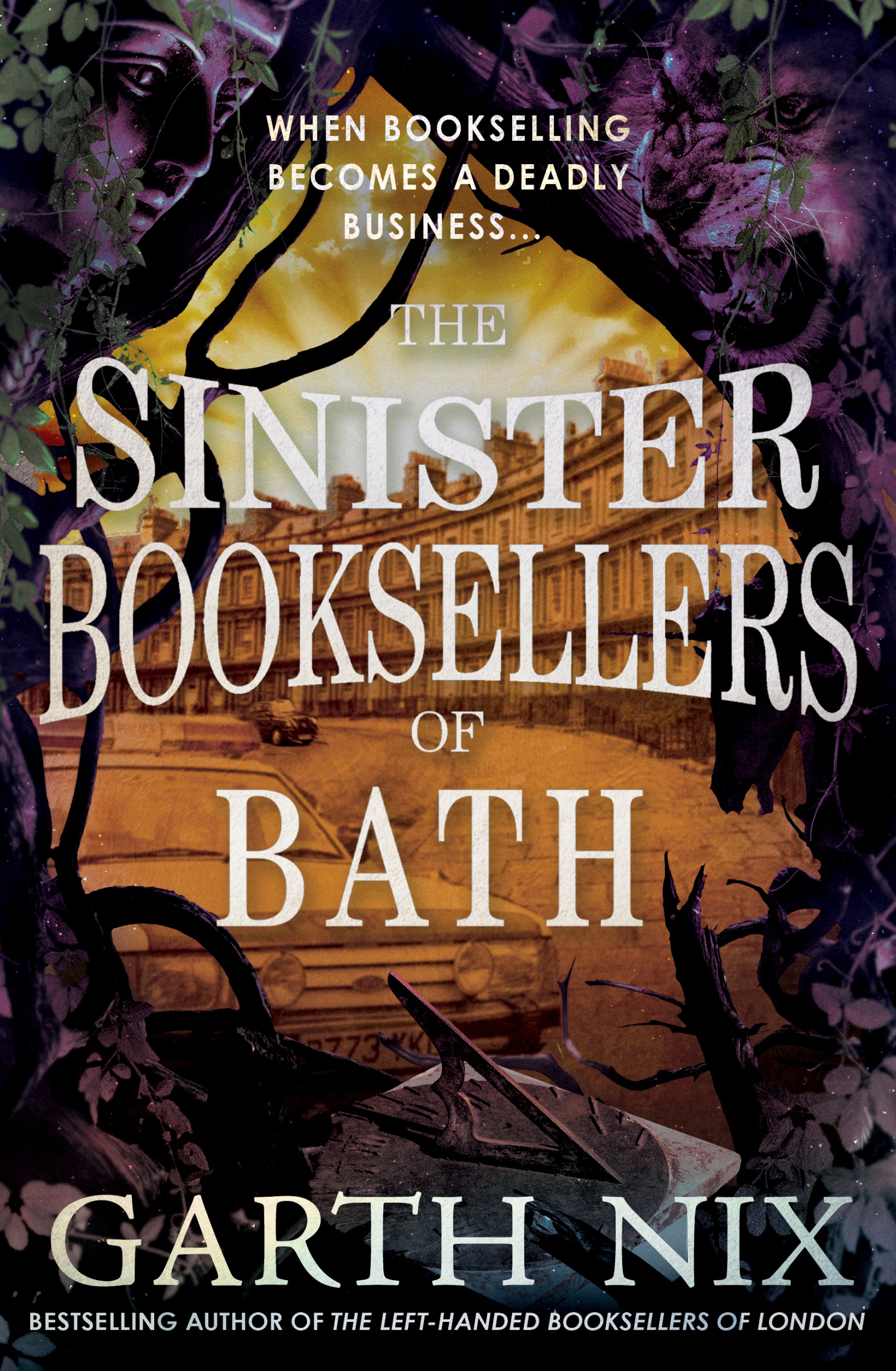
The Sinister Booksellers of Bath is the sequel to Australian author Garth Nix’s bestselling urban fantasy novel The Left-Handed Booksellers of London. Set in a slightly alternate version of England in 1983, the story follows Susan, Merlin and Vivien as they enter a different time and space through a sorcerous translocation map.
From this riveting start, the heroic protagonists and their fellow booksellers proceed to investigate mysterious ancient entities, monstrous living statues, centuries of disappearances and deaths, WW2 military depots, and how Susan should deal with her recently discovered magical inheritance while trying to stay alive.
Writing a sequel is always difficult, as those readers beguiled by the dazzling first book often have high expectations for the follow-up to be equally if not more luminous and thrilling. This is certainly the case with fantasy series, where all the world-building and character crafting tends to be done in book one.
With the sequel, readers now demand something fresh but familiar, a comfortable yet somehow confronting plot. In this book, for example, we meet new booksellers and police officers who are quirky and charming. The new Ancient Sovereigns are majestic and powerful, each with their own unique characteristics and traits.
As with its predecessor, throughout the pages there are mentions of a great diversity of books, art works, fashion styles, cars, weapons, mythical creatures, historical figures, buildings and locales, and lores and legends that are worth exploring, which makes a fun reading experience.
There are also new villains, both divine and mortal, but with more devastating consequences to their crimes. The story’s scale is grander, the writing more serious and sober, the investigation process and relevant research more complex and intense, and the major characters more balanced in terms of their actions and responses to adversaries. Merlin, in particular, appears to have matured a great deal.
However, the story’s focus is always Susan, who knows she is fighting a losing battle in her desperate attempt to remain an ordinary human. Her growth as a character is significant, developing from an innocent, wide-eyed girl to an independent young woman with a strong voice, a clear head and a strategic mind. Yet she can be emotionally fragile, which makes her transformation at the end of the book particularly awe-inspiring.
Finally, in this story, the powers and moral responsibilities of the booksellers are challenged as they police the mythical Old World of England when it intrudes on the modern world. Sometimes the safest and/or easiest course is not the most ethically sound, which is perhaps why the word “sinister” is used in the book title. (That is, apart from the author’s assertion: “Of course [the word] only refers to left-handedness. Nothing else. Honest.”)
Highly recommended.
Note: This book review was originally titled “The riveting fantasy adventure continues” and published under the title “Well worth the read” by Ranges Trader Star Mail, October 13, 2026, P.21.