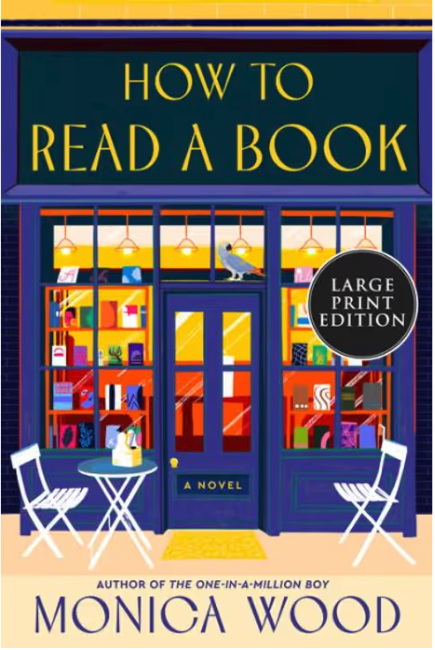
How to Read a Book, by American author Monica Wood, is NOT a user’s guide on reading. Instead, the novel follows 22-year-old Violet, who is being released from prison after serving 22 months for a drunk-driving crash that killed a local woman.
Deeply remorseful for the harm she caused, Violet looks forward to having an opportunity to redeem herself. Yet, it is difficult to start a new life while facing rejection by not just the society at large but also her own family.
Then, in a bookstore, Violet is surprised to find Harriet, a retired English teacher who runs the prison book club on a voluntary basis. A widow full of compassion, Harriet encourages the incarcerated women to discuss books and express their thoughts and emotions in writing.
In the same way that she used to help Violet understand the art and pleasure of reading, Harriet now gladly provides guidance and much needed assistance to the young woman who struggles to get back on her feet.
Coincidentally, in that same bookstore, Violet also comes across Frank, a retired machinist working as a handyman and the husband of the woman she killed in the aforementioned car crash. The surprising run-in prompts Frank to reflect on certain truths about his life and marriage.
With this unexpected encounter, the lives of these three individuals begin to intersect in transformative and illuminating ways. The story is mainly told from Violet’s perspective, but Harriet’s and Frank’s inner worlds are also explored with honesty and wit.
The story is all about redemption, kindness and second chances, as well as forgiveness and letting go of guilt. More importantly, it demonstrates how life can be full of opportunities for personal growth, even in our twilight years, and especially when we falter and stumble.
To this reviewer, the most outstanding part of the story is its portrayal of reading as a journey in which readers can actively participate. Rather than passively absorbing information, it is the readers who make the characters alive and give their stories meaning.
As Violet reflects: “The writer writes the words. The given reader reads the words. And the book, the unique and unrepeatable book, doesn’t exist until the given reader meets the writer on the page.”
This is what Harriett works so hard to show the incarcerated women at the book club: “I am a reader. I am intelligent. I have something worthy to contribute.” As readers, we bring our experiences and values – and, unavoidably, our prejudices and biases – to the book, therefore becoming co-creators with the author.
To read a book is to recognise there is no single “right” or “correct” way to read it. Each reader interprets the book in their own unique ways, turning reading into rich, personal conversations with the characters. It helps cultivate empathy and a sense of hope.
Note: This book review was originally titled “A warm, powerful read about reading” and was published under the title “A warm, powerful read” by Ranges Trader Star Mail, June 9, 2026, P.14. You can also view it on The Star Mail’s website.
 Voices under the Sun 陽光下的聲音