August 4, 2025 10:48 AM
Finished reading Melanie Cheng’s The Burrow. In my attempt to understand the story, I thought the epigraph – a quote from Kafka’s unfinished short story “The Burrow” – and the adventure novel mentioned in the book – Watership Down (1972) by English author Richard Adams – are both important clues.
I’ve never liked Kafka, but the background of the unfinished short story is truly amazing. I particularly like the part that Kafka’s lover Dora Diamant burned his papers “under his gaze and at his request during his last months of life”. She also retained some of his journals and the letters he had written to her. It is a pity that these documents were stolen in a 1933 Gestapo raid.
In contrast, despite Kafka’s request that all of his unpublished works be burned, Max Brod, as Kafka’s literary executor after his death in 1924, published all of them. It is also thanks to Brod, who fled Prague in 1939 when the Nazis occupied that city, that many of Kafka’s unpublished notes, diaries and sketches survived.
As for Kafka’s story, I love it that the protagonist is a badger-like creature who constantly smacks/rams his forehead against the earth around his burrow in order to compact the loose soil, so that his “Castle Keep” would be solid and safe. “The creature lives in constant fear of attack from enemies. This leads to compulsive attempts to make the burrow perfectly secure,” says Wikipedia. Reading actual quotes from Kafka’s story definitely helps me understand Cheng’s story.
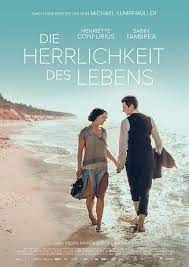
(Image credit: 2024 German film about Kafka and Dora, with English title “The Glory of Life”.)
(Day 64 #WarmWinterRead #WWR25 via @librarieschangelives)
Posted by Christine Yunn-Yu Sun
Categories: Reading, Warm Winter Read, Writing
Tags: Australia, book, e-book, reading, Writing
Mobile Site | Full Site
Get a free blog at WordPress.com Theme: WordPress Mobile Edition by Alex King.