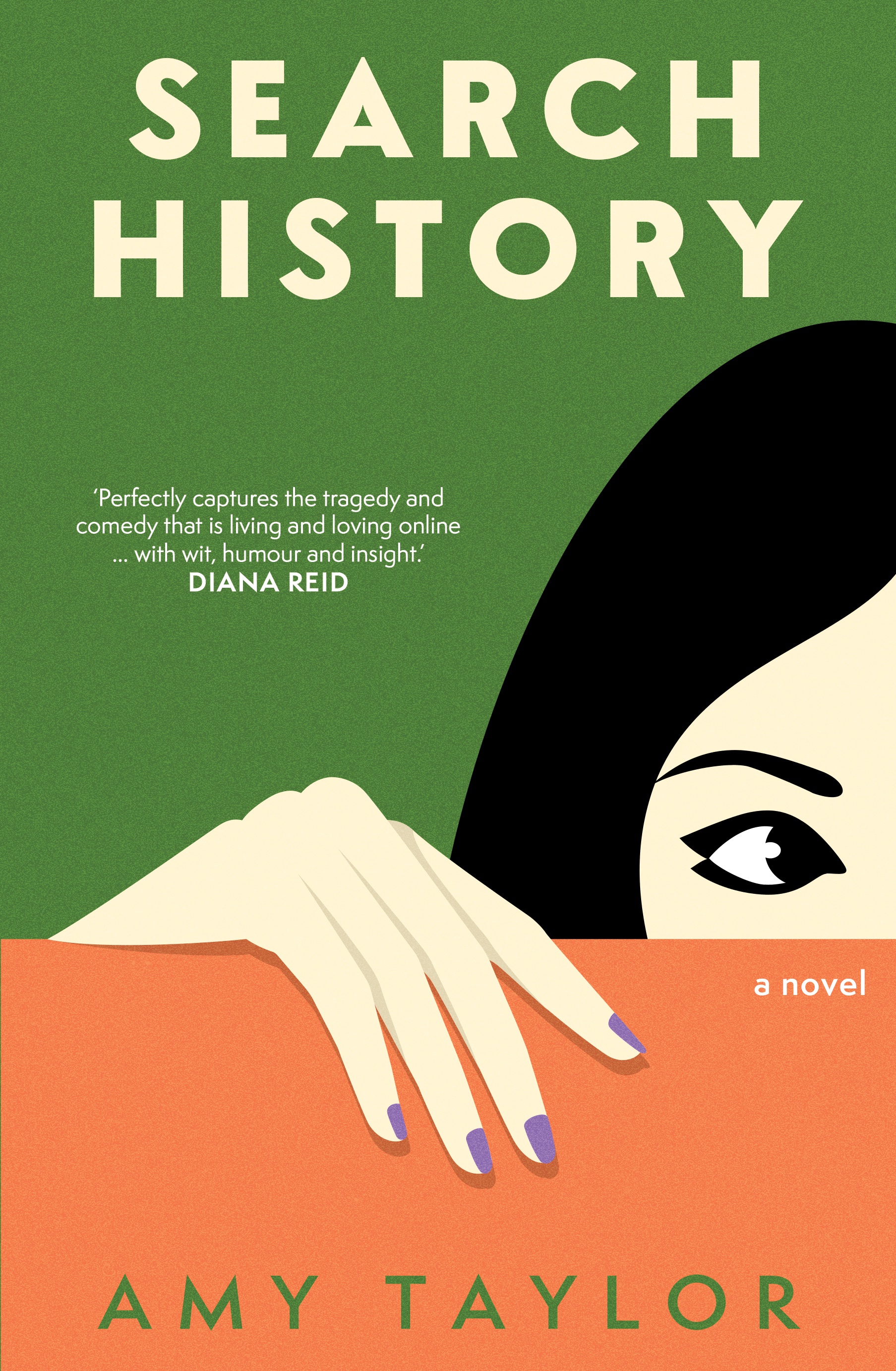
This reviewer has long benefited from the recommendation by Australian author Shivaun Plozza, that when providing critique to a literary work, we should trust our initial emotional response, e.g. how we feel when we first finish reading it. Ask ourselves this, before any intellectual and coherent attempt to find out why we have such a response.
Considering the fact that it took four attempts for this reviewer to finally finish Australian author Amy Taylor’s debut novel Search History, it feels imperative that credible, relevant and significant reasons are found to explain why the reading has been difficult. Indeed, every other reviewer out there seems to have only praises for this book.
Perhaps it is the protagonist Ana, who begins her first-person narrative with the confession that “at some point after a breakup, the desire to sleep with someone else arrives”. She then “selected someone from an app” and, after four days of courtship via text messaging, ended up being nearly choked to death when she met him for the first time.
Perhaps it is how cynical and dissatisfied Ana is about her life, to the extent that she finds people as observed through her phone are far more realistic and reliable than their presence in real life. The moment she meets someone, she immediately goes online to examine their social media posts as a way to validate their past and present.
Perhaps it is the way Ana becomes obsessed with finding out everything about Emily, the ex-girlfriend of her new love interest Evan. Like the nameless first-person narrator in Daphne du Maurier’s 1938 novel Rebecca, Ana is haunted by how perfect Emily is in her posts, which are forever preserved on the Internet even after her death.
Perhaps it is how Ana allows her imagination to run wild, depriving herself of any sense of self-confidence and security as she excessively compares herself to the wonderful fiction that is her own mind’s projection of Emily. Worse, all her guesses, assumptions, deductions and speculations are based on the results of her relentless online searches.
Perhaps first-person narration and self psychology are not a good combination in fiction. As Ana repeatedly tries to analyse her own mind and its impact on her behaviour, her emotions become erratic and her actions unjustifiable. Even more unreasonable is her persistent attempt to analyse Evan’s mind and its impact on his behaviour – and to respond to it accordingly.
Perhaps this is something that everyone who finds themselves in love would do. Perhaps this is a distinct “millennial” phenomenon that is highly relatable to readers of a certain demographic. Perhaps the success of Search History derives from its clever and truthful depiction of the kind of love and angst that is common in our Internet age.
As tech and culture writer Kyle Chayka observes: “It’s easy to hate the Internet, to bemoan its influence; it’s harder to contend with it as our era’s dominant mode of expression.” Perhaps this reviewer is simply too old(-fashioned) to appreciate it.
Note: This book review is originally titled “Love and angst of the Internet age”.


 Voices under the Sun 陽光下的聲音