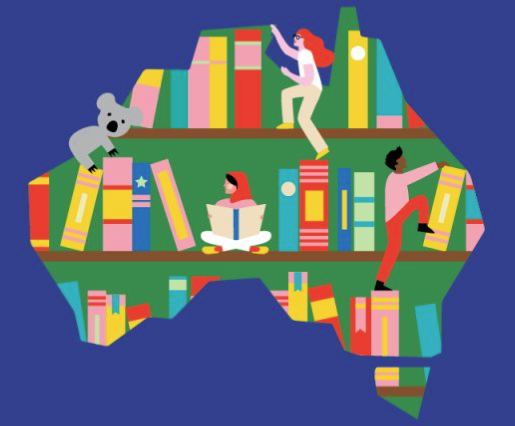
Australia Reads is a collaborative initiative supported by educators, publishers, booksellers, librarians, authors and illustrators. Each year, the organisation publishes important research findings from across Australia and overseas to provide insights into the benefits of reading as well as reader behaviours and trends.
The “Understanding Australian readers: Behavioural insights into recreational reading” research report was recently released by Australia Reads and Monash University’s BehaviourWorks Australia. It tackles three questions: “How do we get more people reading? What are the best ways to reach those who rarely read? And what can we practically do to influence reading habits?”
A survey of 1,622 Australians aged 16 and above reveals the drivers and barriers to their reading behaviours. The research focuses on “reading done for pleasure and relaxation, rather than for educational or professional purposes”. It covers print and digital books as well as audiobooks.
Using a behavioural science approach, reading is defined as “a sequence of six specific behaviours in a reading journey” – from finding, choosing and getting books that one wants to read, to starting and continuing to read, and, finally, to reflecting and sharing.
Based on survey results, four segments of Readers are identified, including “Avid Readers” (22.4%), “Engaged Readers” (30.6%), “Ambivalent Readers” (14.8%) and “Aspirational Readers” (14.7%). There are also two segments of Non-Readers, “Lapsed Readers” (7.1%) and “Uninterested Non-Readers” (10.4%).
The demographics of these six reader segments and their reading habits, intentions, challenges and barriers are presented. These are analysed using the COM-B model, which suggests behaviour (B) is influenced by three interconnected factors – capability (C), opportunity (O) and motivation (M).
Specifically: “For a behaviour to happen, people need to have the skills and knowledge (capability), the right resources and environment (opportunity), and the desire to do that behaviour (motivation).” Particularly noteworthy is “social norms” as a social component of “opportunity”, which sheds light on the role of peers and communities in encouraging reading.
The research finds almost half of Australians wish they could read more, with 54.9% of Readers and 49.8% of Non-Readers saying they read less than they intend to do.
Overall, feeling comforted (37.6%) is the most common emotion associated with reading, followed by feeling inspired (24.2%), joyful (22.6%), enlightened (22.4%) and curious (22.1%). However. reading (49.9%) is less popular than other leisure activities such as watching TV/movies (80.9%), social media and Internet browsing (61.2%) and eating/drinking out (55.1%).
This is concerning, with the 2023 National Arts Participation Survey finding almost 30% of Australians have not read or listened to a single book in a year. Yet, there is no “one size fits all” model to shifting reader behaviours, because each Reader and Non-Reader segment holds distinct attitudes and behaviours around reading.
Nevertheless, by exploring what drives people to read, what stops them, and how they feel about books, we can better understand the sorts of reading barriers and opportunities that Readers and Non-Readers are facing in their daily lives. This, in turn, will benefit our development and evaluation of strategies that can help more people read books, more often.
Further reading:
“Understanding Australian readers: Behavioural insights into recreational reading” research report“, Australia Reads,
“Almost half of Australians wish they read more books. Here are 10 ways to get back into reading in a distracted age” by Breanna Wright, Alyse Lennox and Fernanda Mata, The Conversation, February 12, 2025.
“50% of Australians want to read more – but don’t. So what is stopping us?” by Elissa Blake, The Guardian, February 12, 2025.
Note: This article was published under the title “New findings on reading” by Ranges Trader Star Mail, March 4, 2025, P.21. You can also view it on The Star Mail’s official website.

 Voices under the Sun 陽光下的聲音